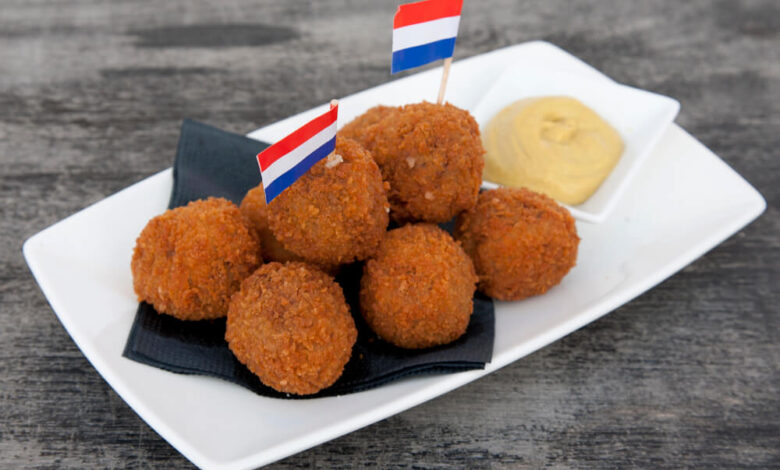
Bitterballen: the crispy, savory snack the Dutch cannot live without
Ask anyone who has ever spent time in the Netherlands what snack surprised them the most and chances are they will say bitterballen. Golden, crunchy and irresistibly comforting, these deep fried bites are the stars of Dutch borrel culture. Whether enjoyed in a cozy brown cafe, shared on a sunny terrace with friends or ordered at a football match, bitterballen are more than just food. They are a ritual, a moment of togetherness and a national guilty pleasure.
What bitterballen actually are
Bitterballen are small, round, deep fried snacks filled with a thick, savory ragout. The filling is typically made from shredded beef or veal mixed with broth, butter, flour, herbs and sometimes a hint of nutmeg. Once cooled, the ragout is rolled into balls, coated in breadcrumbs and fried until perfectly crisp on the outside and creamy on the inside. Traditionally served with mustard, they are a staple on almost every Dutch bar menu.
The origins of bitterballen
Bitterballen trace their history back to the seventeenth century, when frugality and creativity shaped much of Dutch cuisine. Leftover stewed meat was transformed into a thicker mixture that could be fried, creating a practical and delicious bar snack. Over time, these early versions evolved and by the nineteenth century bitterballen had become a standard item in Dutch pubs. Their name is linked to bittertje, a type of herbal alcoholic drink that was once served alongside them, not to any bitterness in the snack itself. The tradition remained and so did the beloved bite.
Different types of bitterballen
While classic beef bitterballen remain the most iconic, the variety available today has expanded significantly. There are veal bitterballen, calf liver bitterballen and versions with chicken or pulled pork. Modern interpretations include vegetarian and vegan bitterballen made with mushrooms or plant based ragout. Some restaurants and breweries offer gourmet versions with truffle, Asian spices, cheese blends or extra spicy fillings. The outside stays the same, crunchy and golden, but the inside can be as inventive as a chef dares to make it.
How bitterballen are used and enjoyed
Bitterballen are most commonly enjoyed as part of a borrel, the Dutch social tradition of drinks and shared snacks. They are served in cafes, bars, beach clubs, festivals, office Friday afternoon gatherings and even at more formal events. And yes, you can also get bitterballen at the snackbar. Beyond the bar scene, bitterballen appear on party platters, at birthdays and increasingly in home kitchens thanks to airfryers and oven ready versions. Some people enjoy them with mustard, others dip them in mayonnaise or spicy sauces. However they are eaten, bitterballen remain the ultimate Dutch comfort snack: crunchy, warm, savory and always shared.